
What Is At-Home Massage? Understanding Swedish, Deep Tissue, Hot Stone Massage, and Cupping

Discover the benefits of bringing massage therapy into your home and learn which treatment may best support your body's needs.

What Is At-Home Massage?
Imagine coming home after a long day, setting aside the demands of your schedule, and allowing yourself an hour to slow down without having to leave your house. Your massage therapist arrives with the necessary equipment, prepares a comfortable treatment space, and brings the experience of a massage clinic directly to you.
This is the idea behind at-home massage therapy, also known as mobile massage.
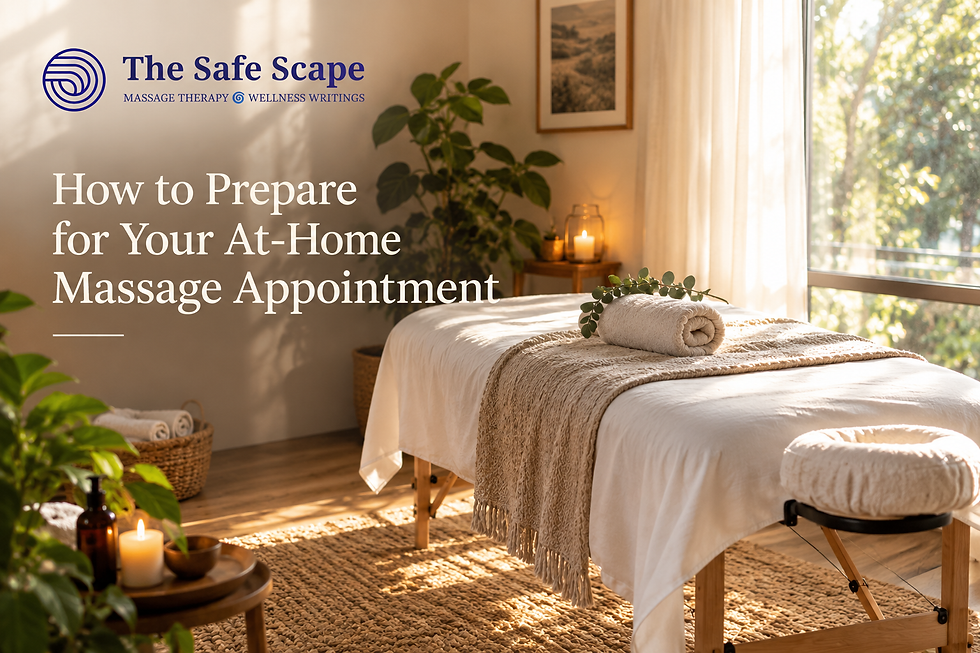
Rather than travelling to a clinic or spa, you receive your massage in the comfort of your own home. Your therapist brings the massage table, linens, oils, and other necessary supplies, transforming a small area of your living space into a temporary place for rest and restoration.
For many people, the appeal goes beyond convenience. Being in a familiar environment can make it easier to settle into the experience, particularly after a busy day or when travelling feels like another task on an already long to-do list. Once the treatment is over, you can continue resting, enjoy a glass of water, or simply take a few moments before returning to your usual routine.
At-home massage can be adapted to different needs, whether you are looking to relax, address muscular tension, or explore complementary techniques that support your overall sense of well-being.
However, not all massages are the same. Different techniques involve different types of touch, pressure, and equipment. Understanding these differences can help you make a more informed decision about the treatment that feels right for you.
1. Swedish Massage: Relaxation Through Touch
Swedish massage is one of the most widely recognized forms of massage therapy. It generally involves flowing strokes, gentle kneading, and rhythmic movements applied to the muscles and surrounding soft tissues.
The pressure can range from light to moderately firm, depending on your preferences and the treatment goals discussed with your therapist.
The experience is often soothing and continuous. Rather than focusing exclusively on one particularly tense area, Swedish massage can incorporate broader movements across different parts of the body. Therapists may use techniques such as long gliding strokes, kneading, and gentle friction to help ease muscular tension and encourage relaxation.
Who might enjoy Swedish massage?
Swedish massage may be a good option if you:
Want to unwind after a stressful or demanding week.
Experience general muscular tension or stiffness.
Prefer flowing, soothing movements over sustained, intense pressure.
Are new to massage therapy and want to become familiar with the experience.
Want to incorporate relaxation into your regular wellness routine.
Although Swedish massage is often associated with relaxation, it can also be adapted to address specific areas of muscular discomfort.
Think of it as an opportunity to slow down, reconnect with your body, and give yourself a break from the constant demands of everyday life.
2. Deep Tissue Massage: Working With Muscular Tension
While Swedish massage often emphasizes flowing movements and relaxation, deep tissue massage typically involves slower, more focused techniques applied to areas of persistent muscular tension.
Your therapist may use sustained pressure, targeted kneading, and their forearms, thumbs, or elbows to work with specific muscle groups and surrounding soft tissues. The pressure is adjusted according to your comfort, the area being treated, and your individual needs.
Despite its name, deep tissue massage does not simply mean pressing as hard as possible. Effective treatment depends on communication, appropriate pressure, and an understanding of the tissues being addressed.
In fact, excessive pressure can cause unnecessary discomfort and may leave you feeling worse rather than better. A productive session should be adapted to your tolerance, with the pressure remaining manageable throughout the treatment.
Who might benefit from deep tissue massage?
This approach may be worth considering if you:
Experience persistent muscular tightness.
Have areas of discomfort associated with repetitive movements or physical activity.
Participate in sports or strength training.
Spend long hours sitting at a desk or performing physically demanding work.
Prefer a more focused approach to particular areas of tension.
Deep tissue massage is not necessarily better than Swedish massage. They simply serve different preferences and treatment goals, and both can be adapted to your needs.
You also do not have to choose between relaxation and therapeutic work. A massage session can combine soothing Swedish techniques with more focused pressure in areas that need additional attention.
3. Hot Stone Massage: The Comfort of Warmth
There is something inherently comforting about warmth. Think of a warm bath on a cold evening or placing a heating pad over tired muscles after a long day.
Hot stone massage incorporates this sense of comfort into a massage treatment through the use of smooth, heated stones, commonly made from basalt, a volcanic rock that retains heat well.
The therapist carefully heats the stones to an appropriate temperature and places or glides them over selected areas of the body, depending on the treatment plan. The warmth can help you feel more comfortable and may allow tense muscles to relax, making the massage experience particularly soothing.
Hot stones may be incorporated into Swedish-style massage strokes or used alongside hands-on techniques. The result is a treatment that combines the sensation of warmth with the therapeutic benefits of massage.
Who might enjoy hot stone massage?
Hot stone massage may appeal to you if you:
Prefer warmth and soothing sensations during treatment.
Feel tense after a demanding day.
Enjoy a slower, spa-like massage experience.
Want to combine traditional massage techniques with the comforting sensation of heated stones.
Find cold weather makes you crave a little extra warmth and comfort.
Hot stone massage is not simply about using warmer equipment. It is about integrating heat thoughtfully into the treatment.
Safety is particularly important. Stones must be maintained at a suitable temperature, and the therapist should assess whether heat is appropriate for you. Hot stones may not be suitable for people with certain conditions affecting sensation or circulation, or for those who cannot reliably perceive excessive heat.
When used appropriately, the warmth can make the treatment feel deeply comforting and restorative.
4. Cupping: Exploring a Different Kind of Touch
Unlike the techniques described above, cupping uses suction rather than relying exclusively on pressure applied by the therapist's hands.
During cupping, specially designed cups are placed on the skin. Suction is created using an appropriate method, gently lifting the skin and underlying superficial tissues into the cup.
In massage settings, cups may be left in place briefly or moved across lubricated skin, depending on the technique being used. This creates a pulling sensation that differs from the compressive pressure experienced during conventional massage.
Some people enjoy cupping as an additional technique when addressing areas of muscular tension. Research into its effectiveness for pain and other conditions remains limited and varies by condition, so it is best viewed as a complementary approach rather than a guaranteed solution.
Cupping can also leave temporary circular marks or bruising. These marks are not evidence that toxins have been removed from the body, nor do they reliably indicate how much tension is present.
Who might consider cupping?
Cupping may be an option if you:
Are curious about alternative massage techniques.
Want to explore a different sensation alongside hands-on massage.
Experience muscular discomfort and want to discuss additional treatment approaches with your therapist.
Are comfortable with the possibility of temporary skin marks.
Cupping is not appropriate for everyone. It should be avoided or carefully assessed when there are skin conditions, wounds, bleeding risks, certain circulation problems, or other relevant medical concerns. Your therapist should discuss suitability with you before beginning.
As with any massage technique, the treatment should be adapted to your comfort and individual circumstances.
Which Massage Is Right for You?
Choosing a massage does not have to be complicated. Start by thinking about what you would like from the experience.
Technique | Main characteristic | May suit you if you prefer |
Swedish massage | Flowing strokes and kneading | Relaxation and adaptable pressure |
Deep tissue massage | Slower, focused techniques | Targeted work on muscular tension |
Hot stone massage | Smooth, heated stones combined with massage | Warmth and a soothing experience |
Cupping | Suction applied through specialized cups | A different sensation as a complementary technique |
These approaches are not mutually exclusive. Depending on your needs, your therapist may incorporate more than one technique into a session, provided the combination is appropriate and discussed beforehand.
For example, a treatment might begin with flowing Swedish strokes to help you settle into the massage before moving into more focused work on the shoulders or back. Heated stones might be incorporated for warmth, while cupping may be considered separately when appropriate.
The most suitable treatment is not necessarily the most intense one. It is the one that makes sense for your goals, preferences, and physical needs.
Bringing the Massage Experience Home
One of the advantages of mobile massage is that it allows you to experience professional massage therapy without leaving your home.
You do not need a dedicated massage room. A reasonably clear space where a massage table can be set up is generally enough. Your therapist brings the equipment and supplies needed for the session, while you provide a comfortable environment and communicate any preferences or concerns before treatment begins.
Afterward, you can take your time getting up, drink some water, and notice how you feel without immediately having to drive home or return to the outside world.
For people with demanding schedules, this can make massage easier to incorporate into everyday life. For others, it offers an opportunity to make rest feel a little more intentional.
At The Safe Scape, the goal is to bring a personalized massage experience to you, with treatments adapted to your preferences and needs. Whether you are drawn to the flowing movements of Swedish massage, the focused approach of deep tissue techniques, the warmth of hot stones, or the distinctive sensation of cupping, the experience begins with a conversation about what you are looking for.
You do not need to know exactly which technique you need before booking. Sometimes, the best place to begin is simply by describing how you feel and what you hope to get out of the session.
Your body does not always need more demands placed upon it. Sometimes, it needs an opportunity to slow down, receive care, and reconnect with itself.
Take some time to feel safe and escape.
Book your at-home massage with The Safe Scape and bring a personalized massage experience into the comfort of your own home.


Comments